Welcome to Imaginal Studies – making active imagination a path of knowledge. See the NEWS page for up to date information on the new studies below

Academy Ad

Hermes We found our Sources in the visionary work of Henry Corbin, James Hillman, and the adepts who inspired them – supported by recent imaginative approaches to participative and transformative research that realise the vision in embodied practice.

Our story is told by Dr Marie Angelo, who with friends and associates made a successful Master of Arts degree at the University of Chichester, UK, with a Distance Learning option. The rich and varied materials are now in our Archive, informing the development of new courses for 2011-12 and beyond.

You can see some of our projects in the students’ showcase and in ideas for research and development. The Splendor Solis Academy is Marie Angelo’s long-term imaginal project, whilst friends develop Hermetika and Imaginal Cosmos, providing the inspiration for new events and courses

We’ll be happy to send you information about making applications or arranging individual consultations.

Thank you for your visit – there is lots more to come, so do call again.

Jump to top


Sources

Thought of the heart and soul of the world

As the website develops, look here for information on our authors, with quotes, commentary and papers.

“There is a mode of knowledge which is intuitive, divinatory, combining the action of imagination and feeling, and which as such is the mode, essentially, of religious knowledge" (Henry Corbin, Temple and Contemplation)
‘The Association des Amis de Henry et Stella Corbin’ can be found at: http://www.amiscorbin.com

“ ...the unconscious, so newly found, was in fact a palace left over from antiquity and the Renaissance, still inhabited by the surviving pagan gods and once called the realm of memoria.’ (James Hillman, The Myth of Analysis, p 172.)
There is now a James Hillman Collection with Opus Archives (Pacifica Graduate Institute, California) which can be found at: http://www.opusarchives.org/hillman_overview.shtml

The picture shows the cover of Hillman’s lyrical text, compiling two papers from 1981 and 1982 which launched archetypal psychology out of a preoccupation with the consulting room, ‘opening the heart-felt connection to the world.’

Opening comments: The very word ‘imaginal’ was coined by scholar and philosopher Henry Corbin as he strove to find a suitable translation for mystical Islamic worlds of experience. So much of his wonderful, complex writing is an attempt to tell us about the substantive, real nature of the imaginal in the experience of the Islamic mystic; not mere phantasy, not ‘just’ imagination, but places, persons, transformative processes. ‘I have been searching, like a young philosopher, for the key to this world as a real world....’ he says; an intermediate Place of subtle imaginal bodies whose organ of perception is the Active Imagination; of imaginal geographies which are the Dwelling place of Sophia, the Soul of the World; of imaginal histories in which to read the Biographies of Archangels. ...

Corbin describes the loss of this world of imaginatio vera (as Paracelsus called it) as ‘the great metaphysical catastrophe’ for Western culture, for with it went the shared, mediating ground where the literal is dissolved and the spiritual ‘imaginalised.’ Post-Jungian James Hillman, much inspired by Corbin, created an ‘archetypal psychological’ perspective, which has called for a restoration of the imaginal as the place to practice the mythic arts of soul-making in many fields. His work has celebrated Jung’s substantial alchemical studies and brought us back to images in themselves. A dramatic move out of the consulting room, ‘from mirror to window,’ alerted the practitioner to the selfishness and ecological dangers of a de-animated earth, whilst a late appearance of Spirit seems to bring Hillman back closer towards Corbin and the mystical perspective. As we explore in our paper ‘Why imaginal Studies?’ this seems a necessary context in which to begin exploring the neglected transpersonal, cosmological arts; astro-logical, alchemical, mantic and mystical.

Click on the link to read the paper. Acrobat ‘Why Imaginal Studies?’ by Marie Angelo & Angela Voss, 2009

Jump to top


Story

Marie Angelo

How did imaginal studies come into being?

A letter from Marie Angelo

Dear friends

The name ‘imaginal studies’ takes me back 17 years to the completion of my doctorate at the university of Sussex, which I called ‘The Imaginal Tree: a Psychological Study of Active Imagination as Education.’ The whole piece sprang from a vivid experience of active imagination which I sought to amplify and follow back into its cultural and psychological roots (if you know Hesse’s Glass Bead Game, you know the delight in such patterning.) On the way I wrote about the depth psychologies and the height psychologies, the Renaissance background in the art of memory, and about magical practice, leading on to Bruno and Christian Cabala. It took me seven years, studying part-time, whilst working full-time as a psychology lecturer, and almost daily stepping in-between the worlds, in the meditative contemplation and ritual I learned from a visionary teacher who taught in the wisdom or mystery school tradition. I wanted to combine it all! I wrote a vast dissertation which one of my examiners from Sussex (shamanic psychologist Professor Brian Bates) suggested should become about three books....

A Place for the MagusWhat actually happened was that I re-worked the text into a book just for my students, called A Place for the Magus: image and intellect in the metaphors of active imagination. When I left London for the University of Chichester on the South coast, I had the opportunity to create an MA as a vessel to experiment with this imaginal vision. Over the last eight years it has developed a life of its own, branching into different pathways. I called my focus ‘Transformative Studies,’ and began to teach the course as a journey through the imaginal cosmos of the alchemists.

I wanted to make a website specially for ‘Imaginal Studies,’ because it is larger than the university. In it I want to include pages for friends and associates, and for the range of imaginal projects on which I’ve been working, specially ‘the Splendor Solis academy’ – there is so much wonderful material to explore.... but as the alchemists say, festina lente (‘make haste slowly.’)

Jump to top


Friends & Associates

Here is the place for the names of tutors, associate lecturers, friends and colleagues with related Imaginal projects. As the website develops, you will be able to click on a name to read further details.

  • Dr Marie Angelo Acrobat, Archetypal Psychologist, Senior lecturer, University of Chichester.
  • Kate Compston, Poet, minister and counsellor, alumnus of the Chichester MA and visiting lecturer
  • Dr Jill Hayes, Dance-movement therapist, Senior Lecturer, University of Chichester
  • Dr Ruth Mantin, Specialist on the Feminine in Religion,  Senior Lecturer, University of Chichester
  • Dr Sue Michaelson,Visual artist and shamanic transpersonal psychologist, Visiting lecturer University of Chichester, 
  • Dr Rod Paton, Musician, composer and community music music therapist, Senior Lecturer, University of Chichester
  • Dr Angela Voss  Acrobat, Musician, astrologer, lecturer in Religious Studies, University of Kent
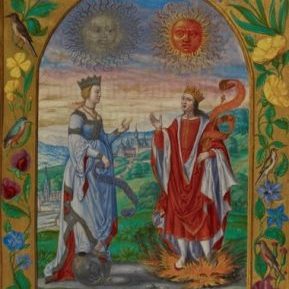
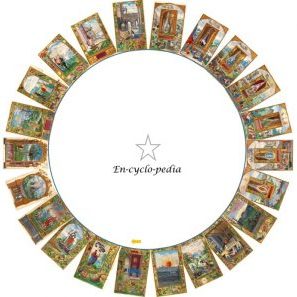
Illuminations of the Splendor Solis, MS Harley 3469 by permission of the British Library

Jump to top

All material ©2009 Marie Angelo | Website by digitalplot.co.uk